

Ivory art in Kerala dates back to the era of Swati Tirunal Maharaja. A throne of ivory chiseled by the Raja is a remarkable work of art. The Maharaja of Cochin is famous for his tortoise shaped palanquin made of ivory,that blooms into an elegant floral shape. The figures of birds and animals adorn the palanquin.
Ivory carving, like the making of coir, is a painstaking and elaborate task. It calls for meticulous precision and an aesthetic sensibility. The tusk has to be hacked with great care. This requires the labor of a couple of men, approximately. Then comes the most difficult part of the process. The artisan has to dexterously draw the pattern that he wants to carve on the surface of the ivory and cut it out with great care. The uneven ivory surface is then polished to its gleaming best with sandpaper. The white and yellow category of ivories are treated differently. While the white ivory gets a methylated spirit treatment , the yellow ivory is decolorized with water and hydrogen.
Scenes from the Ramayana finds depiction in the ivory art of Kerala. The very nuances of the performances are effectively chiseled on the milk white ivory surface. The very famous snake boat races, that is a stunning spectacle of hundred boats competing with each other, is a popular ivory memento. The chundan vallam or the boat races are popular tourist haunts, made famous by the Nehru Boat Race of Alappuzha , initiated in 1952. Ivory artisans also carve out elegant showpieces like ashtrays, figures of birds, animals, deities and a host of other premium quality products, that exudes class and stands as luxury items. This is, however, a dying art form, like many others, that is fast fading into oblivion.

Screw pine weaving of mats is one of the traditional crafts practiced by women in Kerala. The leaves for this mat are taken from the sword-shaped thorny screw-pine plant. The process is tough as the leaf has sharp thorns growing in both directions. Two different types of pines are used in the making of mats. The short variety is used for a large number of items as it can be both faded and painted. The finer varieties of mats need narrower splits and as they need to be extra silk therefore they are boiled in the pure milk.
The weaving is done crosswise; and interlacing continues as new strips are added. On completion the edges are hemmed with narrow screw-pine strips. Superfine mats made of very fine screw-pine leaf splints placed at 8 to 10 per inch are woven by the highly skilled craftsmen. The products made are table mats, bags, cushion covers wall hangings, and beach hats. In the rough textured variety of mats the edges are woven simultaneously and the weaving starts with dual strips, while at the edges it is continued with a single strip. Decorative embroidery adds to the beauty of the products.

Besides being the ubiquitous herbal beauty product and an indispensable item used during the religious rituals, the sandalwood is also a popular decorative tool. Kerala is a repository of this fascinating handicraft. The temples of Kerala are a treasure trove of sandalwood art with intricately carved pillars, beams, door frames. In fact you would be gripped to know that each house used to have a temple that was beautified with sandalwood carving. The pillars, beams , brackets were adorned with flora and fauna images. The Matsya Purana has it that the carved wooden door frames were the perfect way to usher guests. This art became the trendsetter of sorts for temples and buildings across the country. The enamoring temple art is, however, slowly dying.
Chests, furniture, collector’s items like paper weights, candle stands, incense stick stands are the top draws. The spell binding Kathakali is fodder for the sandalwood artisans. Beautiful models in several riveting poses, with the nuances of a live performance captured, adorns many a art lovers’ house. Other mythological characters too are represented. The elephant which is considered a religious icon and is worshipped with great pomp and grandeur, also finds prominent depiction in the sandalwood art. Nut containers, flower vases, snuff boxes are some of the other popular items that are carved out of sandalwood.
The sandalwood artisans follow different patterns like the engraved form, sculptural relief and clip. Cochin, Ernakulam, Travancore, Thrissur, Thiruvananthapuram have gained reputation for their magnificent sandalwood artistry. Each place has its own unique selling point. The Travancore artisans etch out motifs in bold patterns. The carved tables and chairs stand on equally engraved legs which are often chiseled in the shape of vyali, which is considered to be the protector of gods. The mandapam form is another pattern of sandalwood art prevalent in Thiruvananthapuram temples. The Mahadeva temple is a case in point. The mandapam model comprises a chiseled out Lord Brahma riding on a swan, surrounded by a host of other deities. The churches of Kerala also fine testimonials of the sandalwood art. Sandalwood is an auspicious commodity in a Keralite’s life.
Maps of India is your guide on a virtual tour of Kerala. It tells you all that you need to know about the traditional handicrafts of the state ranging from the brass and bell metal industry to the sandalwood carving art.

Trivandrum and Trichur have skilled artists practicing rose wood carving from generations together. Decorative items such as tiger, camel, elephants, kathakali dancers, Christ, couple dressed in the traditional attire and Buddha are a few rosewood carving products which are in high demand.

Mats made with kora / sedge grass are extremely delicate and highly valued. Kora grass is found in abundance along the banks of the rivers and in marshy areas in Tamil Nadu and Kerala.
The process of creating the mat is painstaking and time consuming. The grass which grows to a height of 3-4 feet is green in colour. The grass is harvested in the months of September/ October and February/March and is cut very finely while it is still green. The outer part of the stem is used for weaving while the inside of the stem is removed with a sharp-edged knife. The strips of grass are then dried in the hot sun and care is taken not to expose the grass to humidity, as they tend to turn black with the exposure. As the dried grass strips turn a yellowish green colour they are boiled in a pot of water and then dried again. The dried grass is made up into bundles and then soaked in running water so that the grass remains just below the surface of the water for three to seven days which causes the grass to swell up to three times its original size. After it is then dried again in the sun the slow process of weaving commences on a floor loom. Once the weaving is complete, the mat is dried in the sun for a short while after which it is polished.
With the introduction of chemical dyes a wide hue of colours are now being incorporated into mat making which otherwise used red and black colours. The mats which are extremely reliable and can be easily folded include the 5 x 3 feet sleeping mat, prayer mats, table mats and panthi mats which are used to sit on while eating.

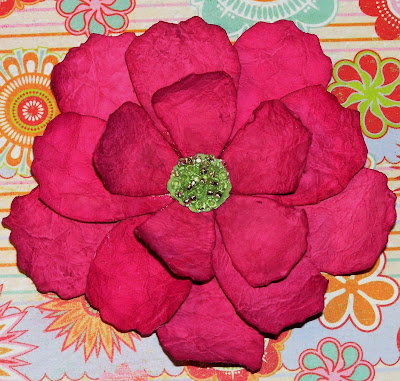
In the previous time the handmade paper craft was mainly carried out by Muslims known as Kagzis or the paper – makers. These craftsmen have their root in Arabia and over the years they have migrated to India mainly during the period of the Ghazni invasions(A.D. 997-1030). The craft flourished in India thereafter as the Buddhists, Jains, Hindus and Mughals were fond of books, paintings and written works. Today the craft is fading because of the mill made paper.
In olden days the process fo paper making was slow but over the years the industry has advanced with new technology and methods evolving to make the process faster. A variety of materials are also used, of which, sun-hemp, flax, sisal, water hyacinth and bamboo are most common.
Hand made paper besides being aesthetic, is economical and environment friendly, characteristics which are dependant on the production process and uses waste material that has low energy requirement and is non polluting.
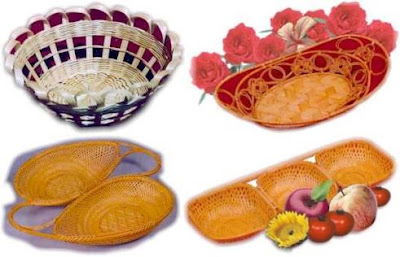
The state of Kerala in south India is a perfect destination for tourism, holidays, health care, yoga, meditation and art & culture. Kerala has a tradition of making beautiful items of handicrafts. Though most crafts in Kerala are also hereditary some amateurs with special interest in art also practice the same. Mat and basket weaving is done at many places in Kerala. All products are painstakingly made by hand. Some of the products include chairs, teapoy, t.v. stand, fans, tiffin carriers, bamboo shades, bamboo bowls and bamboo-reed table mats.
The painted bamboo mats is one the important craft of this place. The main center for this is Irinjalakuda. The subject for paintings are gods, goddesses, animals and birds. The mats for this craft is initially made of the required size and then painted with colours – derived from natural sources.
The trunk of the Banana tree when treated properly gives this fine natural fibre. This craft of Banana fibre is slowly gaining in popularity and is predominantly found in the southern distric of Kanyakumari. Natural fibres like sisal, aloe, pineapple and screw pine and also weaved along with this banana fibre.Nowadays wall hangings and mats of different shapes and sizes are also made out of this fibre apart from the traditional table mats and bags. Traditionally the Pattu sari was also made of Banana fibre but it has become obsolete now.

Aranmula is a small village near Chengannur in Kerala and is renowned for making a special type of metallic mirrors with bell metal, an alloy of copper and tin. It is believed that a divine visitation inspired a widow of this village to discover a mysterious blend of bronze which could be waxed bright into crystal clear mirror. These mirrors are known as Aranmula Kannadi. Though most commercially available mirrors have a coating of silver or other metal on the rear, this is the only mirror of its type, which reflects from the front. Owning such a mirror which is prohibitively costly, is believed to be A Lifetime Possession’ which brings good luck and brings prosperity and keeps evil eyes away.
A technique similar to lost wax method is used to make moulds of these mirrors with the local mud from the field. Once the casting is done, the surface is polished with oil and some metallic powder. The polish may continue for several days to get the required surface. Kannans, the artisans of this unique type of bell-metal are only a handful of familes in the world, who retain till date, this art of getting such reflection from metal.

Kerala – ‘God’s Own’, is a rich southern state presenting many different art forms. Besides tourism, bamboo mat painting is one of the major industries of Kerala. The local artists are skilled in this traditional art.
Their work is first initiated by placing the correct size of mat which is utilized as a canvas for the painting. Then the basic coating is done on the mat which is then followed by the design on it. It is believed by the artist that to work on this surface the artist or the craft person has to put in a lot of concentration and work with peace mind as compared to the other paintings. In these bamboo mat paintings the craftsman depicts religious images, images of the birds and animals, human images as well as capture beauty of nature. Much of these are highlighted with all the possible colours available to give a natural look. The artists design all these paintings in different sizes which gives a very colorful and decent look that is beautifully presented in appealing bamboo reed frames.

It is unthinkable that you sojourn into Kerala and you don’t take back any souvenir! Your tour is incomplete unless you shop for the exclusive handicrafts of Kerala that exhibit the superb and sophisticated craftsmanship of Keralite artisians. The exquisite workmanship reflects the illustrious culture and tradition of God’s own country.
The handicrafts such as- wood carvings, horn carvings, ebony carvings, mat paintings, coconut shell work and so on are stunning pieces of work with inimitable style and accuracy of structure and elegance.
Interestingly, all such recherché creations are carved out of raw materials like horns, bamboo, ivory, wood and so on.
Horn is the basic raw material from which carvings are created. Horn Carving is one of the oldest crafts of Kerala. Craftsmen belonging to Viswakarma Community in Thiruvananthapuram are mainly adept in this art.
Things to shop for- Magnificent artifacts such as flower vases, figurines of birds and animals, toy furniture, minute replicas of snake boats and so on are carved of horns. You can also shop for the ornate combs and hair pins to adorn your locks. Objects of regular use such as pen stands, small boxes, buttons, trays, ashtrays, paper weights, lamps, cigarette cases carved out of animal horns are also available.
Process- The hard horns of animals especially buffaloes are whittled made soft by heating them and oiling them .The grains of the horns are blended with colors and molded into exquisite pieces of art. Sometimes the horns are pared and carved into different forms. The artistry is enhanced when horn carving is combined with dark wood.
Buffalo-horn carving is still practiced in Kerala in places like Trichur, Trivandrum, Kasargod, Ernaculam and Cochin. You can shop for horn carvings at these places.


Textiles:
Textile sector constituting of spinning and handloom is the booming industry ok Kerala. You can choose from a range of Cotton Yarn Fabrics and Knitted Garments while shopping in Kerala .

Spices:
Kerala is a land of spices. You can choose from an electric mix of spices while shopping in Kerala . Kerala has occupied an important place in the global spice market. Kerala has an abundance of the most popular spices like the spices are pepper, cardamom, turmeric, chillies and ginger. Spices are used to make medicines, perfumes and add flavor to a gourmet's delight.

Kathakali Masks:
Kerala is famed for the Kathakali dance form. Specially designed Papier-Mache Masks in different forms and sizes are available. Papier Mache is used to make various products Banana fibre is used to make floor coverings, Rice straw is used to make a silken collage of native scenery on black silk and Cora grass is used to make mats.

Metalware:
Kerala boasts of exquisite metalware. Kerala produces temple bells and lamps from time immemorial. Kerala is known for exotic bell metals. Glistening bell metals are made from a mixture of brass, tin and copper which in turn make spectacular lamps. Different types of cooking vessels, containers for drinking are other bell metal items. Trivandrum, Irinjalakuda and Kasargod are the major places of bell-metal production. The popular product of Aramula, a village near Chengannur in Kerala is the resplendent metal mirror made out of an amalgamation of copper and tin.

Woodcarving:
Kerala has an abundance of forests. Wood carving is widely practiced in Kerala. Temples and palaces emanate typical wood carving designs of Kerala. Doors, windows and ceilings of traditional buildings bear testimony to the high level of craftsmanship and tradition of wood carving in Kerala. Carvings are made on rosewood, sandalwood, cedar wood and teak. Local artistes wear wood carved figures with exaggerated features inspired from mythological and religious characters in Kathakali dance dramas. Wood carvings also include elephants in different postures, other animal figures, paper weights, lamp stands and jewelry boxes like Nettoor jewelry boxes. Wood carving on sandalwood and rosewood is unique to Kerala.

Coir Products:
Coir Products make the base of village industries in Kerala. Floor coverings, door mats , floor matting and rugs, crush-proof pile carpets and flowered Mourzouks are made from coir, the husk of coconut. Different hues of mats with complex designs are coir products.
Exotic cushions are also made of coir. Ratts make for spectacular floor coverings. The
major centres of Coir Products are Alleppey, Kollam and Calicut.

Coconut Shell Craft:
Kerala is dotted by coconut trees. This makes Kerala an ideal for exotic coconut shell craft. Skilled artisans painstakingly produce Coconut shell Craft. The main centre for coconut shell craft is Calicut district in Kerala. The main products are cups, flower vases, snuff boxes, sugar basins, nut bowls, powder boxes and spoons etc and also products decorated with brass.
But the sea-fringed state of Kerala is also the land of spices. Since long past Kerala has carved a niche of its own in the global spice market for its rich flavored spices. Spices are used in medicines, preservatives, perfumes and above all in cooking. Do pick up some exquisite variety while shopping in Kerala.

Handicrafts:
Unique artistic handicrafts are a specialty in Kerala. The dedicated artisans work arduously to make exotic inimitable and artistic handicrafts. The handicrafts are made with ivory, bamboo, palm leaves, sea shells, wood, coconut shells, clay, clothes, metals and stones Natural dyes, natural sustainable materials and simplicity add extra content to the products. The distinctive patterns, design and colors make Kerala handicrafts a favorite amongst compulsive shoppers.


