

If you are a nature enthusiast who is desperately pouring your head over volumes to get your much-needed information on Teak, the wonder tree, then the world famous Teak Museum at Nilambur is just the perfect place for you to be in.
Here you can satisfy yourself with loads of information on this magical bounty of nature.
The well-known Teak Museum is located at Nilambur in the Malappuram district of Kerala. Regarded as the first of its kind in the world and the only one in India; it is a house to the treasures of historical, aesthetic and scientific aspects of Teak.
The museum was established on the campus of the sub centre of Kerala Forest Research Institute (KFRI) in 1995.The museum was established here owing to the historical significance of the region.
The worlds first teak (Tectona grandis) plantation was raised in Nilambur way back in the 1840s in order to ensure a steady supply of Teak timber to the British.
The fascinating abundance of information on this wonder tree attracts an entire horde of tourists to visit this museum throughout the year.
The extensive root system of a 55-year-old teak tree exhibited in the portico for welcoming the tourists is itself metaphorical of the past, present and future of the museum.
The ground floor of the double-storied museum exhibits a translite of Kannimara Teak, the oldest naturally growing teak tree located at the Parambikulam wild-life sanctuary and the life-size replica of the trunk of the largest known teak tree growing in the Malayattoor forest division.
Another translite of a giant tree present in the oldest teak plantation in the Conollys Plot at Nilambur offers the visitors a glimpse into the teak plantation activities undertaken 160 years ago. Some of the other added attractions are the traditional granary and a miniature model of sailing vessel called Uru made of teak wood.
Teak poles of varying sizes and qualities obtained during the process of Thinning of teak plantations are also displayed along with the necessary details of standard classification of teak poles. The depiction of foliage, flowers, fruits and bark of the tree gives us a deeper insight in to the other characteristics of the teak. Here, one can also find the large stump of a 480-year-old teak tree brought from Nagarampara forest range in Kottayam division.
Detailed description on the flower, fruit and natural regeneration of teak as well as the prominent characteristics of these species of trees are exhibited in the first floor of the museum.
In addition to this, the various methods of seed-grading, presowing treatment, preparation of teak stumps, vegetative propagation of teak and the different stages in the complete rotation cycle of teak from seed to mature tree are also on display.
Along with them, one can also come across a collection of over 300 butterflies, moths and insects found in teak plantations. Another exclusive section deals with the various physical disorders of teak, disease-causing insects and pests, plantation and other nursery diseases.
Some of the special attractions of the museum are a series of interesting paintings portraying tree felling operations, a collection of photographs on the phonological events of teak at different seasons, exhibits on traditional harvesting tools and wood samples of different ages from various parts of the world.
The portraits of great figures who had carved out milestones in the successful establishment of teak plantations as well as of those who had laid the foundations to the plantation forestry in India like H. V. Conolly, Chathu Menon and T. F. Bourdillion offer a strong perspective of a glorious era spanning a period of 150 years. This museum also has a world-class library on teak and a mini auditorium for audio-visual presentations.
The 800-metre long bio-resources nature trail on the museum campus is, indeed, an interesting one. This nature trail passes through a heavy growth of shrubs, trees and bamboos. One can also find the different species of birds and reptiles here.
There are 50 naturally grown tree species and 136 endangered and near-extinct tree species of the Western Ghats planted in this nature trail. About 58 species of birds, both resident and migratory, has been recorded in this area. A medicinal plant garden consisting of 150 species is also another attraction worth seeing.
Getting there:
Nearest railway station: Nilambur, about 3 km from the Teak Museum.
Nearest airport: Karipur International Airport, about 36 km from Malappuram.

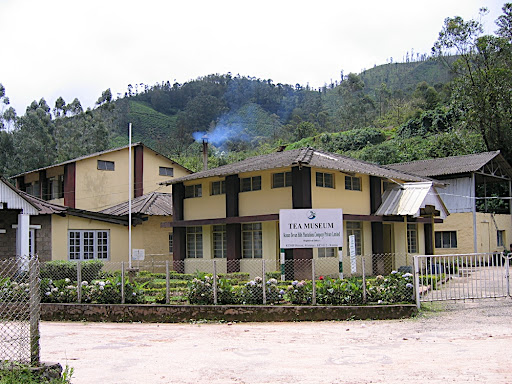
Munnar is perhaps the choicest of places to preserve and showcase some of the exquisite and interesting aspects on the genesis and growth of tea plantations in Kerala's high ranges.
With special emphasis to Munnar, and to the delight of tea lovers and tourists, Tata Tea recently opened a Tea Museum which houses curious, photographs and machineries, each depicting a turning point that contributed to a flourishing tea industry, as seen today in the region.
The museum set up at the Nallathanni Estate of Tata Tea in Munnar is a fitting tribute to the toils and rigours of its pioneers, who showed utmost determination and were resolute in their efforts to transform Munnar into a major plantation centre of Kerala.
The Tata Tea Museum diligently portrays the growth of Munnar tea estates, veritably conveyed through some of the displays like the rudimentary tea roller to the modern fully automated tea factory.
Visitors to the museum can satiate their curiosity on various stages of tea processing, and also learn a thing or two about the production of black tea.
A sundial, placed on a granite block, which was made in 1913 by the Art Industrial School at Nazareth, Tamil Nadu, greets a visitor to the Tea Museum.
At the museum, if one is curious to locate an item with some antiquity, then the burial urn from the second century BC, which was found near Periakanal estate tops the list.
Some of the attention grabbing items on display at the museum include the original tea roller, the 'Rotorvane,' dating back to 1905, used for CTC type tea processing; the 'Pelton Wheel' used in the power generation plant that existed in the Kanniamallay estate in the 1920s; a rail engine wheel of the Kundale Valley Light Railway that shuttled men and material between Munnar and Top Station during the first half of the last century.
A section of the museum also houses classic bungalow furniture, typewriters, wooden bathtub, magneto phone, iron oven, manual calculators and EPABX of the1909 telephone system.
A demonstration room for tea tasting is another attraction where one would come across different varieties of tea. Those eager to understand the nuances of tea processing can do so at the CTC and orthodox tea-manufacturing unit at the museum.
The museum authorities are also contemplating on the idea of allowing tourists to pluck tea leaves themselves and have them processed in their presence.
The Tea Museum by Tata Tea would soon turn out yet another reason for travelers to visit the enchanting plantation hills of Munnar, which have already become one of the prime tourist destinations in Kerala.
Timings: 10:00 a.m. to 05:00 p.m. (open 7 days a week)
Entry Fee:
Adults: Rs.50
Children below 12 years: Rs.10
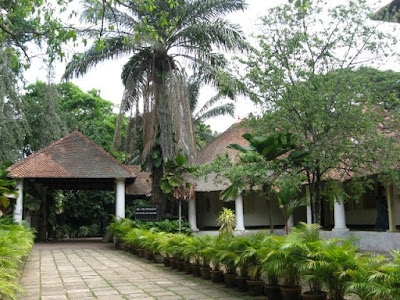
Located in the Napier Museum grounds, Sree Chitra Art Gallery displays select Paintings of Raja Ravi Varma, Svetlova and Nicholas Roerich and exquisite works from the Rajput, Mughal and Tanjore schools of art in India. The collection also includes paintings from China, Japan, Tibet and Bali.
The art gallery housed in a traditional building next to Napier Museum, houses the collections of the Travancore ruling family, and include an interesting assortment of turn-of-the-century Bengali school paintings, and Rajasthani and Mughal miniatures.
Click here for Tours to Kerala
Kerala's favorite artist son, Raja Ravi Varma's works include a number of portraits of kings and their families, British residents and distinguished individuals.
The paintings are so life like that one can easily get a glimpse of a part of Kerala's history, by looking at them.
General Information
Timings It is open from 10 a.m. to 5 p.m. except on Wednesday and Mondays mornings.
Location Thiruvananthapuram, Kerala
Located in the southern part of Thiruvananthapuram, the state capital of Kerala, the Puthe Maliga Palace Museum is sure to impress all its visitors. As the name suggests, a wonderful collection of royal articles are exhibited in a beautiful palace.
The Puthe Maliga Palace was the residence of the Rajas of Travancore. Apart from the collection housed within it, the palace building is itself a very admirable structure. It is the result of the hard work and perseverance of about five thousand laborers. They toiled endlessly for five years to complete the palace building. Superlative architectural skills are displayed. One of the most striking features of the Puthe Maliga Palace Museum is the exquisitely carved wooden ceiling

Exhibits of the Puthe Maliga Palace Museum include beautiful paintings and several other unique and valuable collections of the royal family of Travancore. Many of the items displayed in the museum are indicative of the flourishing spice trade between India and China and Europe. Apart from being an architectural marvel and an excellent repository of precious regal items, the Puthe Maliga Palace Museum is also renowned for being the venue of the Classical Musical Festival that is held each year in the months of January or February. On the occasion of this musical extravaganza, a large number of established artistes from all over the country come to the Puthe Maliga Palace Museum. It is an excellent platform for them to display their skills and it is also a golden opportunity for the visitors to be witnessing their riveting performances. | |
 | |
Priyadarshini Planetarium is one of the most sophisticated and versatile planetaria in India.
This fabulous planetarium complex has a centrally air conditioned Sky theatre of planetarium, Conference hall, Workshops, Sound - studio etc. with a seating capacity of 184, Priyadarsini Planetarium is rated as one of the best horizontal domed planetaria of global standards.
The planetarium has organised shows on:
" MAN AND THE UNIVERSE"- dealing with the origin and different stages of development of astronomy, the structure of different planets and the Origin of the Universe
"MYRIAD SUNS" dealing with the birth and death of stars, black holes, neutron stars, star clusters, galaxies, nebula, supernova. SignificanceOne Of The Most Sophisticated, Horizontal Planetaria In India
General Information
Timings 10:30am, 12:00pm, 15:00pm, 17:00pm
Location Thiruvananthapuram, Kerala
Admission Fees Adults: Rs 10. Children (3-10 years): Rs 5.
Main Attraction Centrally Air Conditioned Sky Theatre

The Pazhassi Raja Museum, located at a distance of 5 kms from Kozhikode at East Hill, houses a veritable treasure trove for historians and connoisseurs of art.
The museum is under the surveillance of the Archaeological Deparment of the State. The museum and the art gallery are named after the great Pazhassiraja Kerala Varma of the Padinjare Kovilakom of the Kottayam Royal Family.
The famous 'Pazhassi Revolt' (against the British East India Company during the second half of the 1700s) was led by Pazhassiraja.
Nicknamed the 'Lion of Kerala', Pazhassiraja is also credited with introducing guerilla warfare in the hills of Wayanad to resist the increasingly intolerable British colonialism. This great freedom fighter was shot dead in an encounter on 30 November 1805 AD. Display Sections The Displayed Antiques
On display in the museum are ancient murals, antique bronzes and coins, megalithic relics such as diamond cysts, temple miniatures and umbrella stones.
Adjacent to the museum is the Art Gallery, which exhibits an excellent collection of paintings by Raja Ravi Varma and Raja Raja Varma.
Exhibits / CollectionPazhassiraja Kerala Varma.
General Information
Main Attraction Ancient Murals
Location 5 kms from Kozhikode, at East Hill, Kerala


Introduction to the Natural History Museum :
Museums of Kerala are rich repositories of a variety of objects that have immense scientific, historical or artistic value. A trip to any museum is therefore a very enriching experience. The Natural History Museum in Trivandrum, Kerala is no exception and a visit to it will be a very rewarding experience for everyone. It is a must see not only for the people residing in the state but also for all the tourists visiting it.
The spacious building of the Natural History Museum houses a diverse and rich collection of ethnographic pieces. Animal Skeletons, Stuffed Animals and Birds form part of the exhibit. It is indeed amazing to know that the museum was initially started with the individual collection of General Cullen. He presented his personal collection of minerals and books and that was all that the museum had to be proud of in the earliest stage. However with the passage of years, the stock got richer.
There are several galleries within the Natural History Museum. Each of the galleries is specifically assigned to a particular category of the animal kingdom. Hence there are separate galleries for the Mammals, the birds, the vertebrates, the invertebrates and the skeletons. A library and a laboratory also form part of the museum. The Ethnology Gallery provides valuable insight into the races of mankind along with their place of origins, their distribution and distinctive characteristics.
At the entrance of the Natural History Museum, there are fossils of tree trunks.
The Natural History Museum remains open from Tuesdays to Sundays from 10’o clock in the morning to quarter to five in the evening. However on Wednesdays, it opens only at 1’o clock in the afternoon.
India reckoned as the top ten naval power in the world owes its credit to dedication and selfless services rendered by the brave men of India's formidable naval force.
It is of significance for civilians to understand the value of existence of such a force, which plays a crucial role in safeguarding territorial waters of India.
The Maritime Museum, located at INS Dronacharya in Kochi throws light on the genesis, history, evolution and landmarks of the Indian Navy.
Step into the Maritime Museum to have a feel of the great maritime heritage of Indian Navy, which dates back to Indus Valley civilizations; Kerala's trade links with Arabs, its famous maritime hero Kunjali Marakkar; Influence of India's maritime power in South East Asia; Colonization of Indian sub-continent by European powers.
At the museum, the visitors are enlightened on the evolution of the navy since 1612, when the Indian Marine was established in Surat.
Another section of the museum presents interesting aspects of shipbuilding activities in India. It unravels India's prowess in shipbuilding, which took its culture to the shores of Java, Sumatra and Bali between 3rd century BC and 12th century AD.
The museum also has a section, which highlights Indian Navy's share of glory, when it took on its aggressors and eventually emerged victorious in the end.
These include details of Junaghad operation, the Goa liberation, Indo-Pak conflicts of 1965 and 1971, Operation Cactus, Operation Pawan and the strategic maneuvers during Kargil.
Visiting time: 9:30 am to 1.00 pm and 2.00 pm to 6.00 pm
Getting there: The Museum is located on the beach road about 1 km south of St.Francis Church in Fort Kochi.
Nearest railway station: Ernakulam, about 15km.
Nearest airport: Cochin International Airport, about 20 km from Ernakulam City.

The Napier Museum in Trivandrum is an anthology of Indian antiquity. The Museum is located 400 meters east of Indian Airlines. In this museum you shall find a rich collection of fine ornaments that the queen of the ancient times used to wear.
While walking past the corridors of the museum you shall have a sojourn down the ancient past. You can recollect your knowledge of history and tally them with the rare and unique antique collection at Napier Museum in Trivandrum.

Description of the Napier Museum Trivandrum: Kerala had been under the dynastic reign of the Cholas, Pallavas and Chalukyas. They have left their impact in the Indian Culture and so while you visit the Napier Museum in Trivandrum you shall discover their arms and ammunitions inside it. Moreover the coins inscribed by them are also available at Napier Museum in Trivandrum. These coins indicate their achievements and intentions. Collection of antiques at Napier Museum in Trivandrum: The coins carry specific engravings which deal with the specific time in which they were created. In the Napier Museum you shall also find the life sized figures of Kathakali dancers in their original attires. A wide collection of contemporary ornaments would definitely enchant you. The famous 8th century South Indian Bronze is also available at Napier Museum in Trivandrum. The figures carved out of these bronzes are extremely durable and are rare these days. | |
| |
Temple carts forms another important antiquity item which are not found nowadays. The time for visit at Napier Museum in Trivandrum is 10 am to 5 pm. It remains closed on Mondays and on the first half of Wednesdays.
The Museum of Kerala History is at Edapally on the way to Aluva. It is the best place to have a quick glimpse of Kerala's history. A statue of Parasurama, the sage who is said to have created Kerala, greets the visitors.
Life size figures depict important landmarks of civilization from the Neolithic age to the modern era. There is an excellent narration of Kerala history in the past 2000 years.
It presents one-hour light and sound spectacles of life-size sculptures in concrete, of the makers of Kerala history, together with the background music and commentary with glimpses of the vastness and diversity of Kerala's history over the centuries.
Click here for Tours to Kerala
The commentary is in English as well as in Malayalam. 87 figures who shaped the history and culture of Kerala in the last two thousand years have been represented here in Light and Sound Tableaus.
The story, from the Early peoples of Kerala to the modern age is interspersed with Social, Cultural and literary facets is a fascinating one.
General Information
Timings The light and sound shows take place in the following timings:
10:00, 10:30, 11:00, 11:30 12:00, 14:00, 14:30, 15:00 15:30, 16:00.
The museum remains closed on Mondays and Public holidays.
Location 10 Kms From Ernakulam, Kerala
Main Attraction Light And Sound Show
Admission FeesRs. 5/- per adult. Rs.2/- per child

Location: Adjacent to Sree Padmanabhaswamy Temple at East Fort in Thiruvananthapuram.
Visiting hours: Open 8.30 - 12.30 hrs. and 15.30 - 17.30 hrs.Closed on Mondays.
The palace was built by Maharaja Swathi Thirunal Balarama Varma - the King of Travancore, who was a great poet, musician, social reformer and statesman.
This rare specimen of workmanship in the traditional Travancore style of architecture also has exquisite wood carvings.
The palace museum displays paintings and various priceless collections of the royal family and is located near the Padmanabha Swamy Temple. Ph: 2473952 Entrance fee: Adults: Rs. 10 Children: Rs. 3 Foreigners: Rs. 20 Camera permit: Rs. 15.
Getting there:
Nearest railway station : Thiruvananthapuram central,about 1 km.
Nearest airport : Thiruvananthapuram International Airport,about 6 km.

The Krishnapuram Palace Museum is located in the city of Kayamkulam in the state of Kerala in the southern part of India. The 18th century Krishnapuram Palace is located at a distance of 47 kilometers from Alleppey in Kerala. The palace was built during the reign of the Travancore ruler, Marthanda Verma, and is an excellent example of the architecture of Kerala. The gabled roofs, narrow corridors and the dormer windows of the Krishnapuram Palace Museum in Trivandrum are reflective of the typical Kerala style.
In the recent past the Trivandrum Krishnapuram Palace Museum in Kerala has been renovated and it now features as a protected monument under the Archaeology Department. In the present day, the Krishnapuram Palace is a fascinating archaeological museum which exhibits a rare collection of unique paintings and bronze sculptures.

According to the legends it is believed that Lord Vishnu was the family deity of the Kayamkulam Kings who resided in the Krishnapuram Palace. The Gajendra mural was situated at the entrance to the palace from the pond, so that the kings could worship the idol after taking their bath. The other attractions which are worth viewing on visit to Krishnapuram Palace Museum include the immaculately landscaped garden which has a beautiful and wide range of flora within the complex of the palace. A Buddha Mandapam has been built in the recent past within which there is a recently recovered statue of the Buddha. | |
| |
The Krishnapuram Palace Museum can be visited on all days from 9 a.m. to 5 p.m. except on Mondays.
The nearest rail head is at Kollam, which is 39 kilometers away. The nearest airports are Trivandrum International Airport and the Cochin Airport.
The Krishna Menon Museum houses a good collection of Paintings by Raja Raja Varma and Raja Ravi Varma. A section is devoted to the Memorabilia of the late V.K. Krishna Menon, former Indian Defence Minister and national leader.
The section in honour of the great Indian leader V.K Krishna Menon has on display the collection of personal belongings and souvenirs gifted by this world leader.
General Information
Location Adjacent to the Pazhassi Raja Museum, Kozhikode (Calicut)
Main Attraction Memorabilia Of Late V. K. Krishna Menon

Every district of Kerala has a characteristic feature and topography of its own. Some are famous for its beaches, other still for their backwaters, and others for their historical museums and cultural places. Undeniably it is one of the most beautiful places of India brimming with tourists at all point of the years. Kerala Science and Technology museum, Trivandrum was established in 1984 sponsored by the government of Kerala with a view to uplift the state’s present technological interest and development. If you are touring Kerala and happen to have a inquisitive mind about scientific occurrences do visit this place. Significantly enough this a museum in addition to a study center where researches and studies are held day in and day out.
Situated in the heart of Thiruvananthapuram city on a two and a half hectare plot of land, Kerala Science and Technology museum displays some of the most advance scientific gadgets, gizmos, and electronic appliances. You can visit the museum with your child as there are many gadgets set up in a playful manner which is going to interest your child. The inbuilt planetarium holds daily shows of the duration of 40 minutes in English.
It is opened from 10. A.M to 5 P.M and there is a small entry fee for adults.

Kerala Science and Technology museum displays the advancement and zeal of the people of kerala in the field of science and technology. The discussions and explanations held in the close quarters of the museum are quite elaborate and researched.
India reckoned as the top ten naval power in the world owes its credit to dedication and selfless services rendered by the brave men of India's formidable naval force.
It is of significance for civilians to understand the value of existence of such a force, which plays a crucial role in safeguarding territorial waters of India.
The Indo-Portuguese Museum, located at INS Dronacharya in Kochi throws light on the genesis, history, evolution and landmarks of the Indian Navy.
Step into the Indo-Portuguese Museum to have a feel of the great maritime heritage of Indian Navy, which dates back to Indus Valley civilizations; Kerala's trade links with Arabs, its famous maritime hero Kunjali Marakkar; Influence of India's maritime power in South East Asia; Colonization of Indian sub-continent by European powers.
At the museum, the visitors are enlightened on the evolution of the navy since 1612, when the Indian Marine was established in Surat.
Another section of the museum presents interesting aspects of shipbuilding activities in India. It unravels India's prowess in shipbuilding, which took its culture to the shores of Java, Sumatra and Bali between 3rd century BC and 12th century AD.
The museum also has a section, which highlights Indian Navy's share of glory, when it took on its aggressors and eventually emerged victorious in the end.
These include details of Junaghad operation, the Goa liberation, Indo-Pak conflicts of 1965 and 1971, Operation Cactus, Operation Pawan and the strategic maneuvers during Kargil.
Visiting time: 9:30 am to 1.00 pm and 2.00 pm to 6.00 pm
Getting there: The Museum is located on the beach road about 1 km south of St.Francis Church in Fort Kochi.
Nearest railway station: Ernakulam, about 15km.
Nearest airport: Cochin International Airport, about 20 km from Ernakulam City.


The Hill Palace Museum in Kochi is the largest of all archeological museums in Kerala.Built in 1865, it was once the official residential palace of the royal family of Kochi. It is now a qualified Ethno archeological museum besides having the distinction of being the first Heritage Museum in Kerala. | |
| |
Location of Hill Palace Museum The Hill Palace Museum is located in Thripunithura in the Ernakulam District of Kochi. It is 12 kms from Kochi on the Ernakulam-Chottanikkara route. | |
| |
| |
Information about Hill Palace Museum The whole complex of the Hill Palace Museum has 49 buildings, all of which follow the traditional style of architecture of Kerala. These buildings are enclosed by terraced lands spread over 52 acres and adorned with ponds, fountains and lawns. Among the exhibits at the Hill Palace Museum are paintings, murals, manuscripts, inscriptions, carvings and sculptures, mainly from the Travencore Royal House, Paliam Devaswom and the archeological department. Other attractions here are the gold crown ornamented with precious stones, coins, epigraphy samples and majestic beds. There is also a gallery of contemporary art, the Paliam Gallery. | |
A display of unique large collection of superior quality driftwood articles of very high artistic value, prepared through a rare and innovative modern art-form
Visiting Hours
Weekday: 10.00am to 01.00pm, 1.30pm to 6.00pm
Sunday: 12.30pm to 6.00pm
Monday: Holiday
Entrance by Pass
A Museum to display a unique collection of superior quality driftwood articles of very high artistic value, prepared through a rate and innovative modern art form, is functioning at the scenic village of Kumarakom.
A Visitor would find there a huge collection of root sculptures of various shapes and designs.
During her professional tenure in the Andaman & Nicobar archipelago, a dynamic lady school teacher used to pick up pieces of driftwood deposited by the sea in the shores, comprising twisted tree trunks, stumps, roots etc.
which had potential for transformation to sculptures with marginal efforts, thanks to the Bay of Bengal prune to frequent cyclones that make the sea turbulent and unpredictable. Every cyclone brought back many things to the shore as it washes away from it.
Some of these wood pieces and roots were centuries old, and having drifted across the seas they became more resilient. Having traversed vast distances, what is left of a tree is its sturdiest part which has weathered much inclemency.
The picked up pieces were cleansed, dead parts removed, scraped and trimmed to conform to the shape she had in mind. In the course of the process, it so happened, the Nature?s original designs could come out more forcefully, evocatively and permanently.
Many of these pieces closely resemble birds, animals, reptiles, amphibians and fishes. Shaping, scraping, polishing, finishing and preserving are done with fierce dedication.
The admirers and connoisseurs of this rare and innovative form of art frequent the Bay Island Driftwood Museum.
The student community finds the art form adopted in the preparation of the exhibits in the museum interesting and educative as the museum inculcates in them the qualities of imagination, creativity, originality and initiation to produce useful articles out of materials normally considered waste.

Location : Near the Thrissur Zoo, 2 km from Thrissur town, central Kerala.
Visiting hours : 10:00 am to 5:00 pm on all days except Mondays and national holidays.
The Archaeological Museum was until recently accommodated in the Thrissur Town Hall building. Now it has been shifted to the Kollengode Palace, an architectural delight.
The majestic building houses a gallery of murals from all over Kerala and preserves a rare treasure of Veerakallu, temple models, olagrandhangal (manuscripts on dry palm leaves), megaliths etc.
Veerakallu or herostones are stone engravings and sculptures of figures and weapons belonging to the heroes of days gone by. Most of these were recovered from the forests of Wayanad and Thrissur.
The megalith collection includes earthen pots, urns etc. The temple models cast in plaster of Paris are excellent representations of the ancient temples in the State.
Getting there:
Nearest railway station : Thrissur
Nearest airport : Cochin International Airport, about 58 km to the south.


Located 12 kilometers south of Sulthan Bathery, Wayanad, Ambalavayal museum is a hot bed for historians, archeologists and common travelers alike. It exhibits the remnants of all the traces of a long lost civilization that flourished in the mountains of Wayanad. The museum is a veritable treasure trove of clay sculptures, ancient hunting artifacts, and other varied sculptures. The artifacts throw light on curios which goes back to the 2nd century. From the artifacts one can make out that the civilization that existed in the mountain valley of Wayanad was one of the most advanced races with superior hunting tactics and equipments. Reminiscent of a tribal culture, who were valiant soldiers, Ambalavayal museum Wayanad is one of the best maintained, museum in Kerala’s Malabar region. Tribal artifacts like headgears, jewelry, figurines of Nandi and other deities are also kept on display. A graceful idol structure of goddess Urvara adorns the main hall. Significantly enough these tribal believed that as a goddess of fertility, she is responsible for the well being of the land and the keeper of the people.
A series of stones carved artistically speaks of battles and valiant warriors is kept in one corner and referred to as the Hero Stones.
HOW TO GET THERE?
Sulthan Bathery which is the nearest town to Wayanad, is 98 kilometers from Kozhikode. Frequent bus services are available from there to the museum. You can also board the train as per your convenience from Kozhikode.


